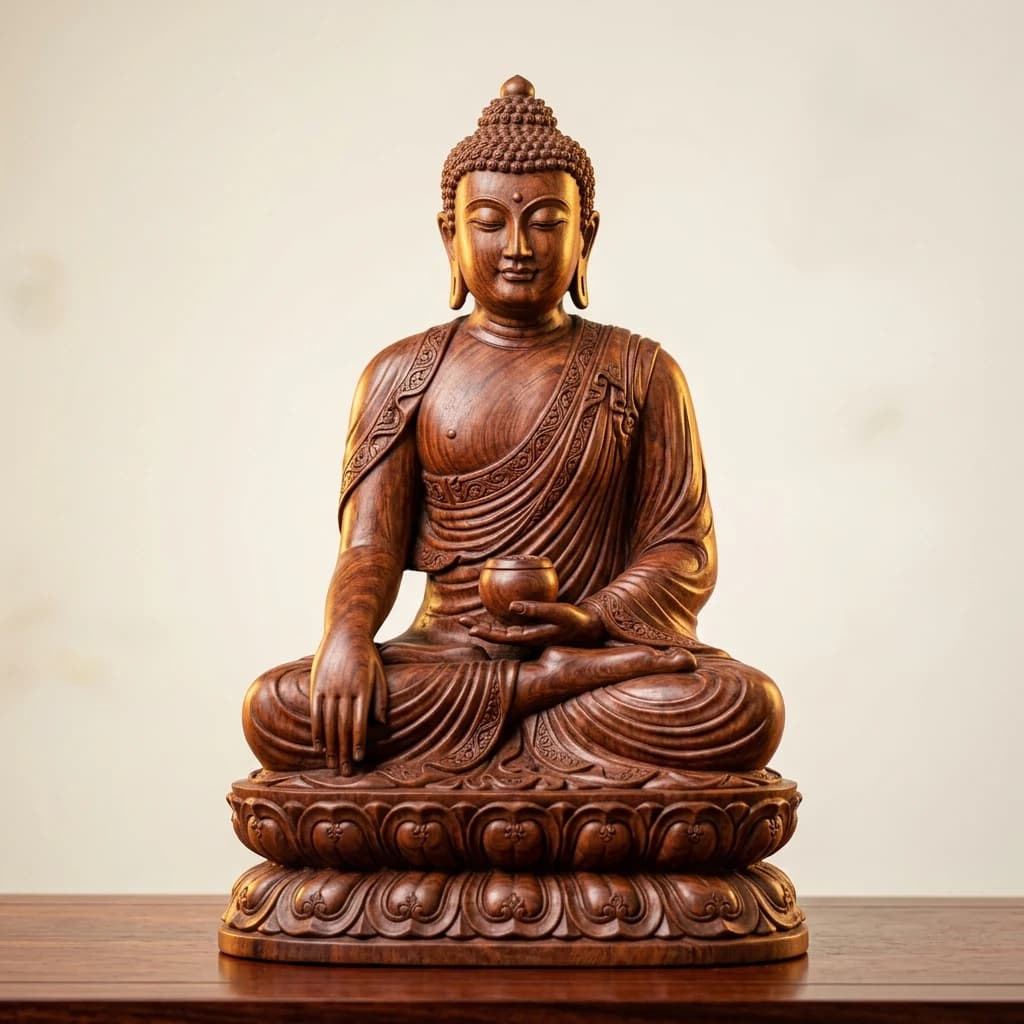
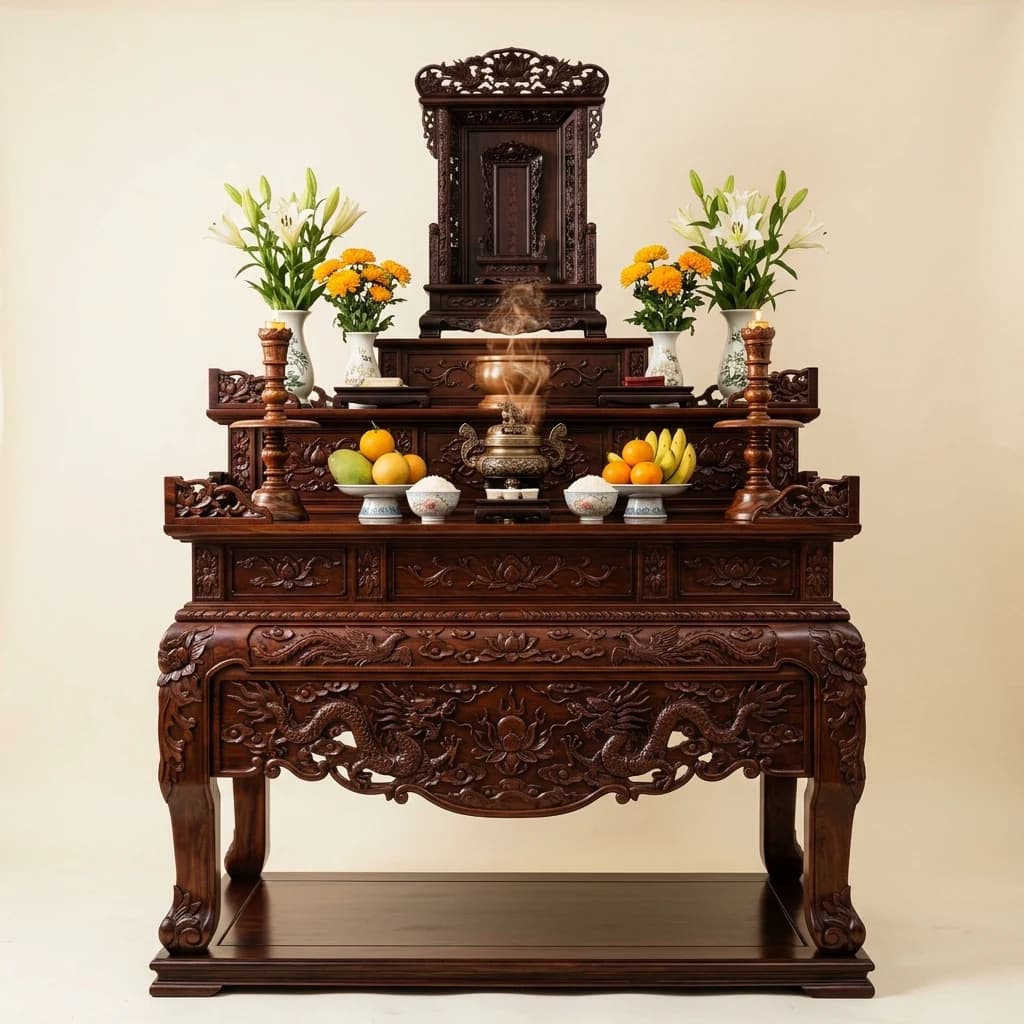
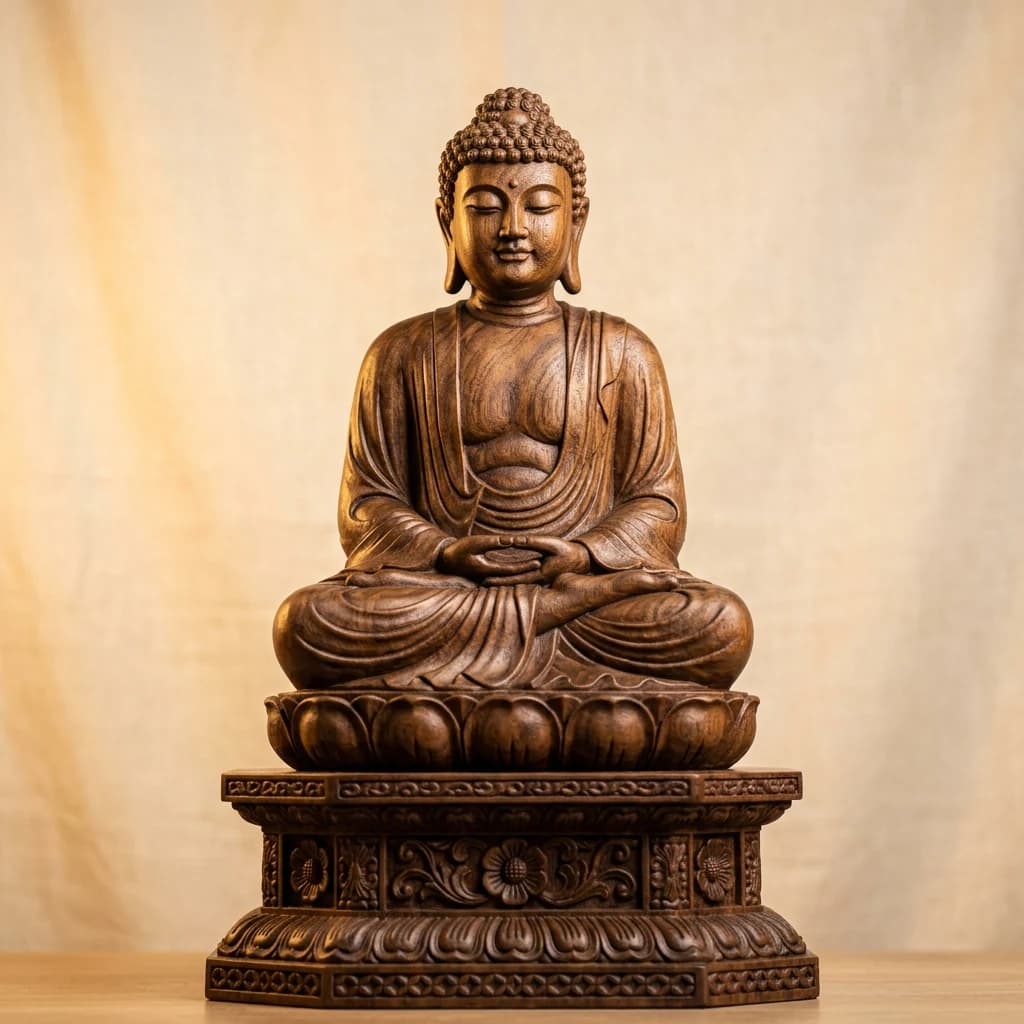
Guide to Preserving Ancestral Altars
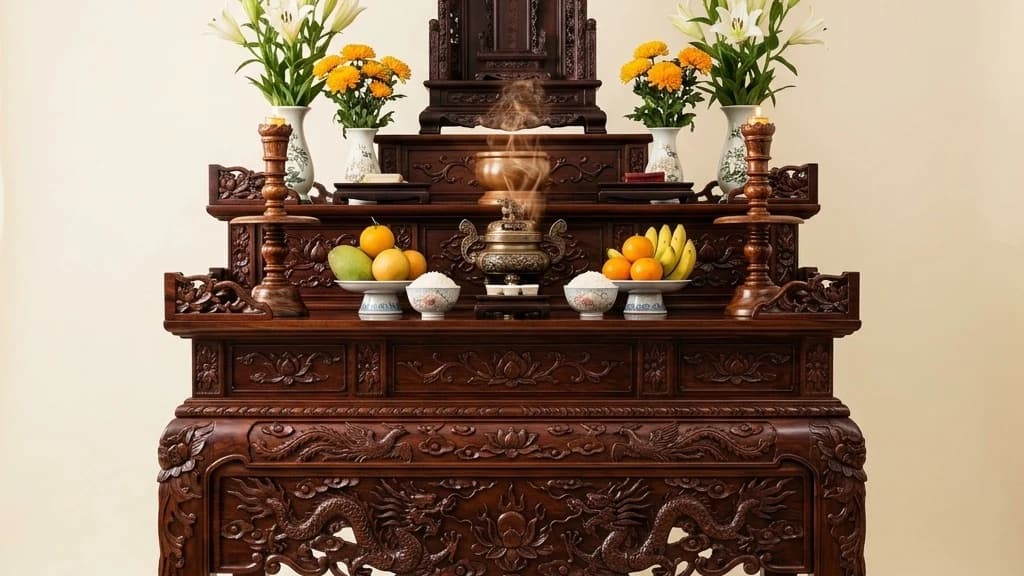
How to Care for a Wooden Altar: A Complete Guide
A wooden altar is more than just furniture. For many Vietnamese families, it is an important part of the worship space representing respect and family traditions. A high-quality natural wooden altar can last for decades when properly cared for.
Natural wood responds to its environment. Humidity, sunlight, temperature changes, water, dust, smoke, and cleaning methods can all affect the appearance and condition of a wooden altar over time.
Why Is Proper Altar Care Important?
Changes in humidity and temperature cause wood to absorb moisture and expand, lose moisture and shrink, develop cracks, warp, or change color. An altar may also be exposed to incense smoke, flower water, fruit, food, and candles. Proper care preserves the natural beauty, original finish, structural stability, and durability of the altar.
1. Keep the Altar in a Dry and Well-Ventilated Area
Place the altar in a dry, well-ventilated area away from rain, bathrooms, steam, damp walls, and water sources. Long-term excessive moisture contributes to mold, mildew, wood deterioration, insect activity, and warping.
2. Protect the Altar from Direct Sunlight
Direct sunlight gradually changes the color of natural wood, especially richly colored hardwoods such as Burma Padauk (Pterocarpus macrocarpus). If the altar is near a window, use curtains, blinds, or UV-protective window film.
3. Maintain a Stable Indoor Humidity Level
Excessive humidity contributes to mold, mildew, musty odors, and insect activity. Extremely dry conditions or rapid humidity changes can cause wood to shrink and crack. The goal is to maintain a relatively stable indoor environment.
4. Dust the Altar Regularly
Use soft microfiber cloths, cotton cloths, or soft-bristle brushes. Follow the wood grain when possible. Avoid aggressive rubbing and do not allow water to remain on the surface. For carved areas, use a soft brush to remove dust from small details.
5. Avoid Using Excessive Water
Do not soak the altar or wipe it with a heavily wet cloth. Water can penetrate joints, carved details, and unsealed areas. If you need a damp cloth: dampen → wring thoroughly → wipe gently → dry the surface afterward.
6. Avoid Harsh Cleaning Chemicals
Do not use bleach, strong kitchen cleaners, high-concentration alcohol, solvents, or abrasive products. These can damage wood color, paint, oil finishes, and protective coatings. The safest approach is a clean, soft cloth and gentle cleaning methods.
7. Be Careful with Water, Flowers, Fruit, and Offerings
For water spills: immediately absorb with a dry cloth. For oil or liquids: gently blot rather than rubbing. For candle wax: allow to cool and harden before carefully removing. Avoid sharp objects to scrape from the wooden surface.
8. Manage Incense Smoke
Large amounts of smoke over a long period may contribute to residue and discoloration. Ensure the room has appropriate ventilation. Avoid strong airflow directly toward burning incense or candles due to fire risk.
9. Check for Termites and Wood-Boring Insects
Inspect periodically for small holes, fine wood dust, mud tubes, or weak hollow-sounding areas. Avoid applying strong chemicals without understanding their effect on the wood and finish. For valuable altars, professional pest treatment may be the safest option.
10. Avoid Moving the Altar Unnecessarily
Frequent movement can loosen joints, scratch the surface, damage legs, break carvings, and cause accidental impacts. If a large altar needs to be moved, use proper lifting techniques with at least two people.
11. Protect from Extreme Temperature Changes
Avoid placing the altar directly next to air-conditioning outlets, heaters, fireplaces, or large glass windows. Constant hot or cold airflow creates localized environmental changes that affect the wood.
What Should You Avoid?
- Do not place the altar in a damp area.
- Do not leave it in direct sunlight.
- Do not use an excessively wet cloth.
- Do not use harsh chemicals.
- Do not scrape the surface with sharp objects.
- Do not place hot objects directly on the altar.
- Do not place candles or incense too close to flammable materials.
Simple Maintenance Schedule
Daily
Keep the area tidy, remove fallen incense ash, and clean up spills immediately.
Weekly
Dust the altar surface and check flower vases for water spills.
Monthly
Clean detailed carvings, check for mold or mildew, and inspect for insect activity.
Periodically
Inspect the entire structure, check joints and stability, and evaluate whether the finish requires professional maintenance.
Frequently Asked Questions
What should I use to clean a wooden altar?
Use a clean, soft, dry microfiber or cotton cloth. If necessary, use a slightly damp cloth that has been thoroughly wrung out, followed by a dry cloth.
Can I use alcohol to clean a wooden altar?
It is generally better to avoid using alcohol unless you know the existing finish is compatible with it. Alcohol can damage certain finishes.
Why does a wooden altar develop cracks?
Natural wood expands and contracts as environmental humidity and temperature change. Significant or rapidly developing cracks should be inspected by a qualified professional.
Conclusion
The most important principles are:
Keep it dry → protect from direct sunlight → clean gently → limit water and harsh chemicals → inspect for insects → maintain proper fire safety.
A well-maintained wooden altar not only preserves the beauty of the material but also helps maintain a clean, dignified, and peaceful worship space for generations.