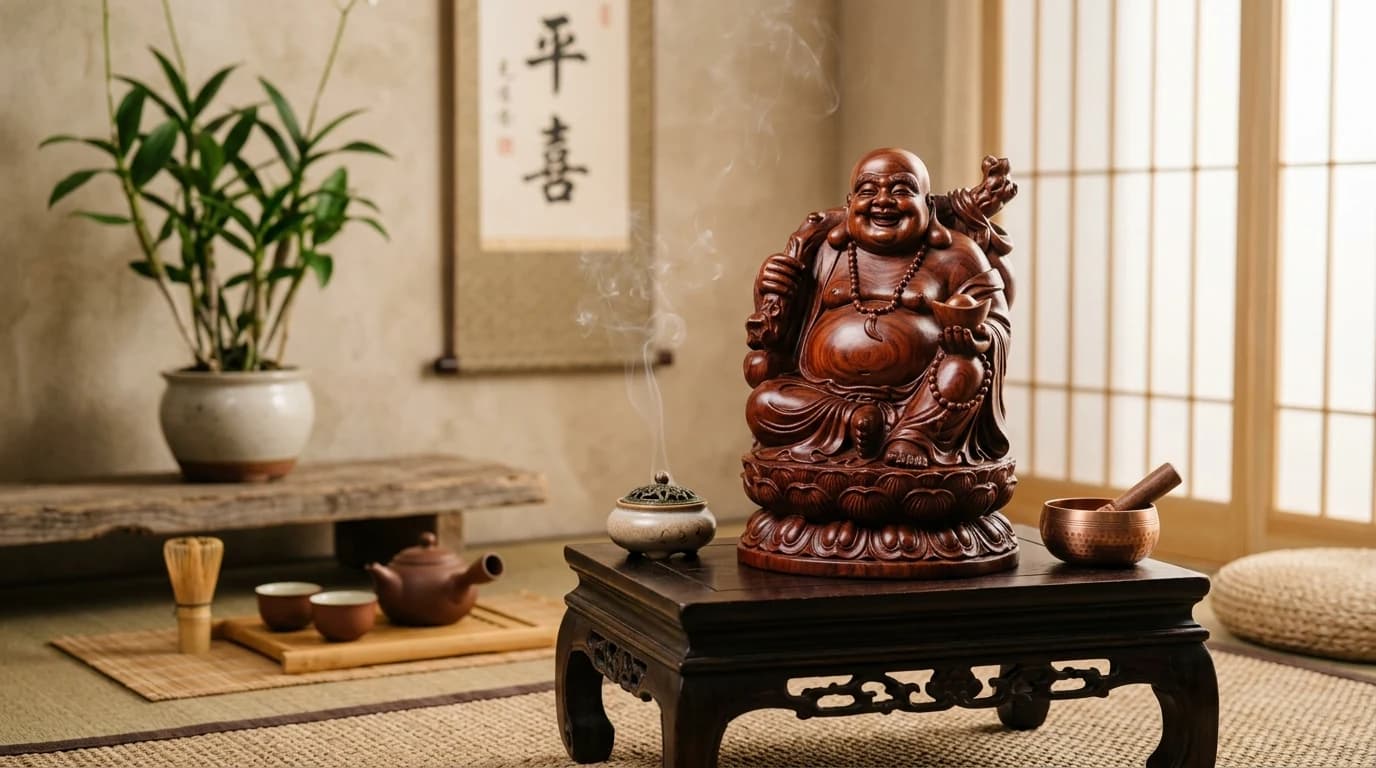
Feng Shui Placement for Altars to Attract Wealth

Best Direction for a Home Altar: How to Position Your Ancestral Altar Correctly
The direction of a home altar is an important consideration in many Vietnamese households. The altar is regarded as a sacred and respectful space where family members remember their ancestors and express gratitude.
People often consider several factors: house orientation, room layout, natural light, ventilation, cleanliness, and traditional feng shui principles.
Why Is Altar Direction Important?
A properly arranged altar should provide a sense of respect, serenity, cleanliness, privacy, and stability. Traditional feng shui considers the altar's orientation and environment, but there is no single direction that is universally suitable for every home.
What Is the Best Direction for a Home Altar?
Traditional Vietnamese feng shui often considers East, West, South, North, and intermediate directions. The appropriate direction may vary by house and homeowner. Some systems consider the homeowner's birth year and elemental characteristics.
These are traditional beliefs rather than scientifically established methods. A respectful and practical location is often more important than a specific compass direction.
Where Should a Home Altar Be Placed?
In a Traditional House
A dedicated altar room or separate worship area is often preferred, providing privacy, quietness, better separation from daily activities, and a clear spiritual focus.
In an Apartment
Common options include a dedicated worship room, a quiet section of the living room, a properly designed altar cabinet, or a wall-mounted altar. The area should be clean, stable, and respectful.
Positions to Avoid
Directly Facing the Main Door
Traditional feng shui advises against this. The altar needs privacy and stability. If unavoidable, use a partition, decorative screen, or altar cabinet to create separation.
Near Windows with Strong Sun or Rain
For wooden altars and statues, excessive sunlight and humidity may cause color fading, cracking, warping, and surface deterioration.
Under a Structural Beam
Traditionally discouraged. A beam can also make the altar area feel visually heavy or constrained.
Near a Bathroom
Bathrooms are associated with moisture and plumbing. Keeping the altar away protects both the sacred space and wooden furniture.
Under a Staircase
The area may have frequent movement, limited headroom, noise from above, and dust accumulation.
How Should a Home Altar Be Arranged?
A good general principle:
Keep the altar balanced, symmetrical where appropriate, clean, and uncluttered.
The incense burner is typically centered. Flowers may be placed on each side. Candles or lamps should be arranged symmetrically. Avoid placing too many unrelated decorative objects.
How High Should an Altar Be?
Height should allow comfortable worship activities while maintaining a dignified appearance. For wall-mounted altars: safety should always take priority over symbolic measurements. Ensure it is securely mounted and strong enough to support the intended weight.
How to Protect a Wooden Altar
If made from high-quality hardwood such as Burma Padauk (Pterocarpus macrocarpus), proper environmental conditions help preserve the wood:
- Avoid direct sunlight and excessive humidity.
- Keep the surface dry and dust regularly.
- Inspect for insects periodically.
- Avoid strong cleaning chemicals.
Common Mistakes When Setting Up a Home Altar
- Choosing a direction without considering the floor plan — surroundings matter as much as compass direction.
- Placing the altar in a busy area — reduces privacy and respect.
- Placing the altar in a damp location — damages both wooden furniture and worship objects.
- Overcrowding the altar — too many objects make it visually cluttered and difficult to maintain.
- Ignoring safety — candles, incense, and electrical equipment should be arranged carefully.
Frequently Asked Questions
What is the best direction for a home altar?
There is no single direction universally suitable for every home. Traditional feng shui may recommend different directions depending on the homeowner and house layout.
Should a home altar face the main door?
Traditional practices generally discourage this. If unavoidable, a partition or altar cabinet can help create greater privacy.
Can an altar be placed in the living room?
Yes. This is common in modern apartments. Choose a quiet, clean area that is visually separated from everyday activities.
Is feng shui scientifically proven?
Traditional feng shui is a cultural and philosophical system rather than a scientifically established method. It can serve as a traditional framework for thinking about space, orientation, and harmony.
Conclusion
Rather than looking for one universally "lucky" direction, consider the complete environment:
House orientation → altar position → privacy → cleanliness → ventilation → humidity → safety → family tradition
A well-designed altar should ultimately create a space that feels peaceful, dignified, clean, stable, and respectful — whatever type of home you live in.