The Feng Shui Meaning of Maitreya Buddha Statues
The Meaning of the Maitreya Buddha Statue: A Symbol of Happiness, Prosperity, and Peace
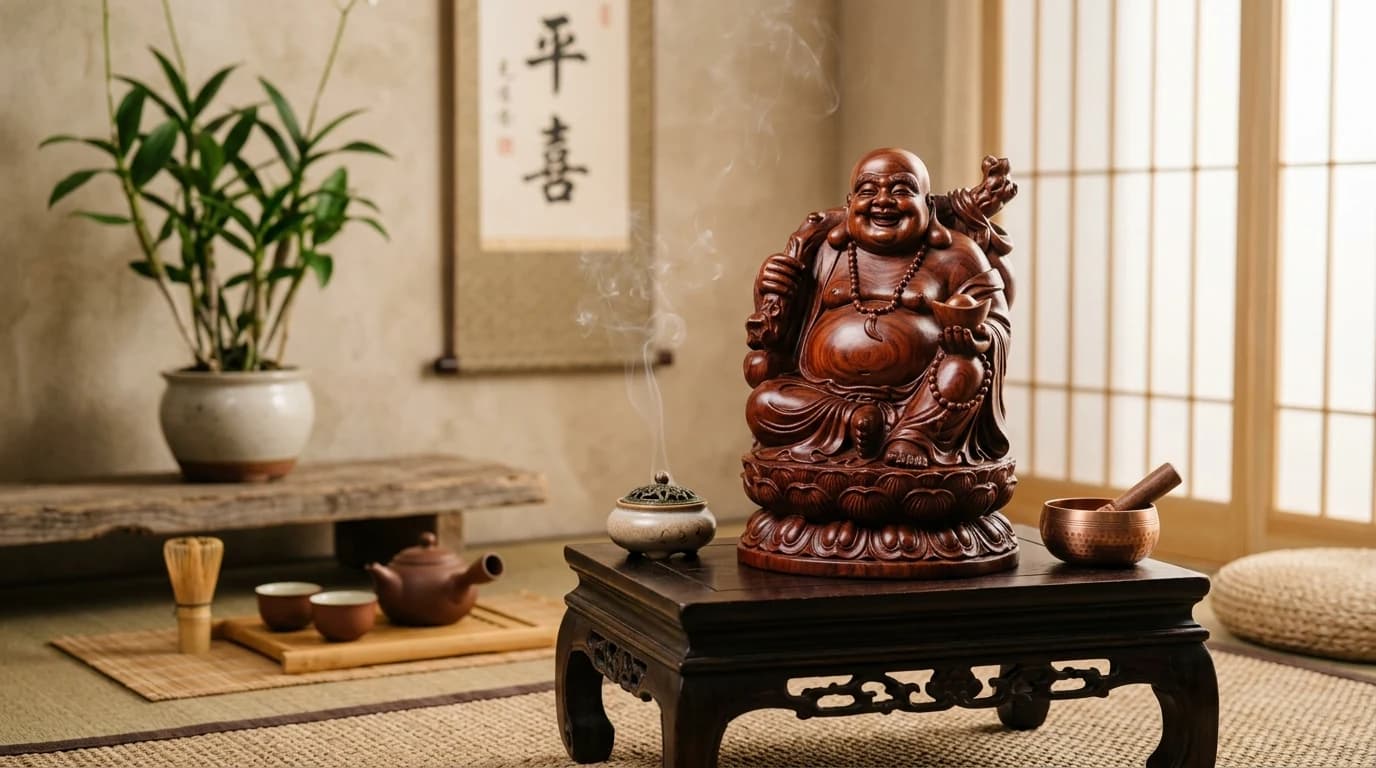
The Maitreya Buddha statue is one of the most recognizable Buddhist-inspired figures in East Asian culture. With its joyful expression, welcoming smile, large belly, and friendly appearance, it is commonly associated with happiness, peace, generosity, good fortune, and prosperity.
Who Is Maitreya?
Maitreya is a Sanskrit name associated with the future Buddha in Buddhist tradition. Maitreya Bodhisattva is regarded as the Buddha who will appear in the future and succeed Gautama Buddha (Shakyamuni Buddha).
However, the familiar large-bellied, smiling figure is strongly associated with Budai (布袋), a Chinese Buddhist monk and folk figure. Over time, Budai became closely associated with Maitreya in East Asian traditions. Maitreya and Budai are not originally the same historical figure.
The Smile and Large Belly
The smile represents happiness, joy, optimism, compassion, generosity, and inner peace. It reminds people that happiness can also come from generosity, contentment, and a peaceful state of mind.
The large belly may symbolize generosity, tolerance, open-mindedness, abundance, and the ability to accept life's difficulties without being overwhelmed. This is primarily a cultural and symbolic interpretation rather than universal Buddhist doctrine.
The Meaning in Vietnamese Culture
In Vietnam, Maitreya statues are commonly found in homes, offices, shops, and businesses, associated with:
- Happiness: The smiling face represents joy and an optimistic life.
- Good Fortune: Regarded in popular culture as symbols of positive energy.
- Wealth and Prosperity: Some statues include gold ingots, coins, or money bags — from Chinese folk culture and Feng Shui traditions.
It is important to distinguish folk beliefs from Buddhist teachings. Buddhism does not generally teach that owning a statue automatically produces wealth.
Common Statue Forms
Seated Maitreya
Creates a sense of stability, peace, and contentment. Works well in living rooms, offices, meditation rooms, and Buddhist spaces.
Standing Maitreya
Creates a more dynamic and energetic impression, often used in gardens, entrances, and spacious environments.
With a Ruyi Scepter
The Ruyi symbolizes fulfillment, good fortune, success, and the realization of wishes.
With a Gold Ingot
Symbolizes wealth, financial prosperity, and business success — primarily from Chinese folk culture and Feng Shui.
Carrying a Cloth Sack
Associated with Budai, symbolizing generosity, giving, simplicity, and freedom from material attachment.
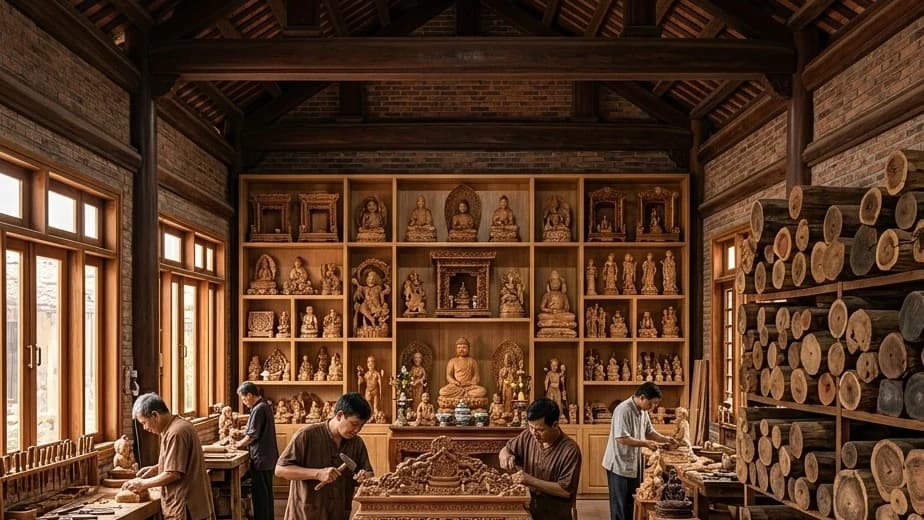
Wooden Maitreya Statues
Wooden statues are valued for natural grain patterns, distinctive colors, individual variations, and excellent carving potential. Common wood types include:
- Burma Padauk (Pterocarpus macrocarpus) — orange-red to reddish-brown, good durability.
- Rosewood (Dalbergia spp.) — darker colors, attractive grain patterns.
- Teak (Tectona grandis) — durability and natural resistance to environmental conditions.
Should You Place a Maitreya Statue in Your Home?
Many families display Maitreya statues in living rooms, home offices, and reception spaces. Choose a location that is:
- Clean, respectful, and stable.
- Dry and protected from direct sunlight.
- Away from areas where it can easily be knocked over.
- Not placed directly on the floor.
How to Care for a Wooden Maitreya Statue
- Keep away from direct sunlight.
- Maintain a dry and stable environment.
- Dust with a soft cloth.
- Avoid excessive moisture and harsh cleaning chemicals.
- Check periodically for insects or termites.
Does a Maitreya Statue Bring Wealth?
Maitreya-inspired statues are culturally associated with wealth and prosperity, but there is no scientific evidence that a statue itself can directly generate wealth. The deeper symbolic values include happiness, compassion, generosity, tolerance, optimism, and peace of mind.
How to Choose a Wooden Maitreya Statue
- Choose the right wood based on color, grain, hardness, and durability.
- Check moisture content — improperly dried wood may crack, warp, or shrink.
- Examine carving quality — balanced proportions, a harmonious composition, and a convincing expression matter more than excessive detail.
Conclusion
The Maitreya Buddha is a deeply meaningful figure representing Happiness → Peace → Compassion → Generosity → Good Fortune → Prosperity.
A beautiful wooden Maitreya sculpture is not defined only by wood species or size. Its quality also depends on craftsmanship, proportions, facial expression, carving details, and harmony with its surroundings.