Meaning & story
Shakyamuni Buddha
The story of the Buddha
Shakyamuni Buddha was born Siddhartha Gautama in the Lumbini garden, the son of King Suddhodana and Queen Maya of Kapilavastu, in the border region of present-day Nepal and India. Though raised in luxury, the prince was moved by the sight of birth, ageing, sickness and death, and gave up his throne to seek a way beyond suffering.
After years of harsh asceticism failed to bring him the truth, he chose the Middle Way and sat in meditation beneath the Bodhi tree at Bodh Gaya, where he attained enlightenment. His first sermon at the Deer Park taught the Four Noble Truths, the foundation of Buddhist teaching. He went on to teach for forty-five years before passing into Parinirvana at Kushinagar.
Meaning of the meditating Shakyamuni
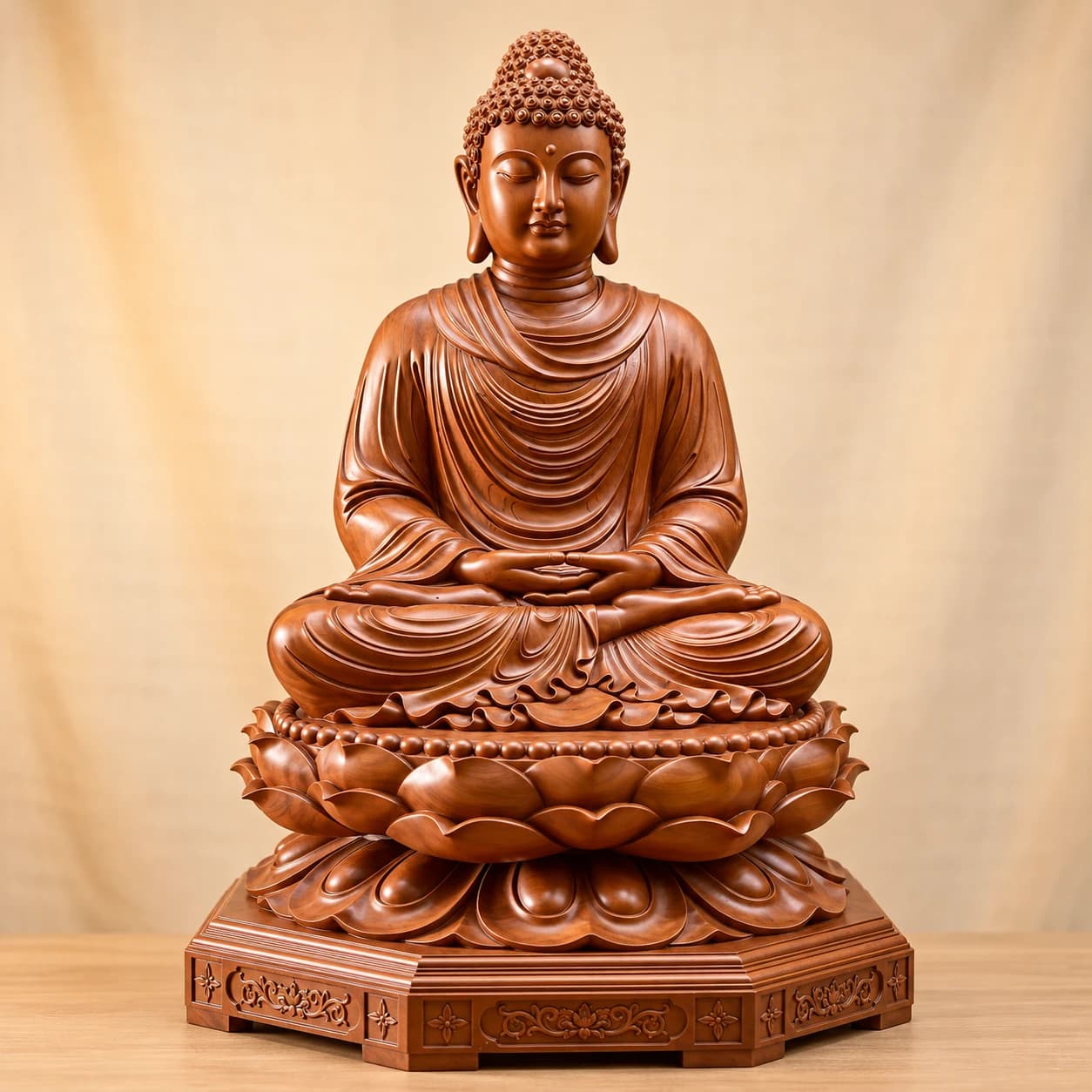
The full lotus posture and hands resting one on the other in the meditation gesture (dhyana mudra) recall the moment the Buddha stilled his mind before enlightenment. The image is a reminder to stay mindful, let go of worry and find calm within.
For Vietnamese families, the Shakyamuni statue stands for wisdom and compassion. It is honoured in pagodas and home altars as an aspiration towards goodness and a wish for peace for the whole household.
Details of the figure
Shakyamuni statues are usually carved with the ushnisha, the raised crown that signifies perfect wisdom, tight curls of hair, long earlobes that suggest listening to all beings, and half-closed eyes looking downward to show inner stillness. The lotus base beneath evokes purity rising from the mud.
Placement suggestions
By tradition the statue is placed somewhere high, clean and dignified, such as a worship room or a dedicated altar, away from low or noisy spots. When it shares an altar with ancestral tablets, the Buddha is usually given the higher tier. Vesak, on the fifteenth day of the fourth lunar month, is when Buddhist families commemorate the Buddha’s birth.