Meaning & story
Maitreya Buddha
The story of Maitreya
In Buddhist scripture, Maitreya is the Buddha of the future, now dwelling in the Tushita heaven and destined to be born as the next Buddha after Shakyamuni. The name Maitreya comes from the word for loving-kindness.
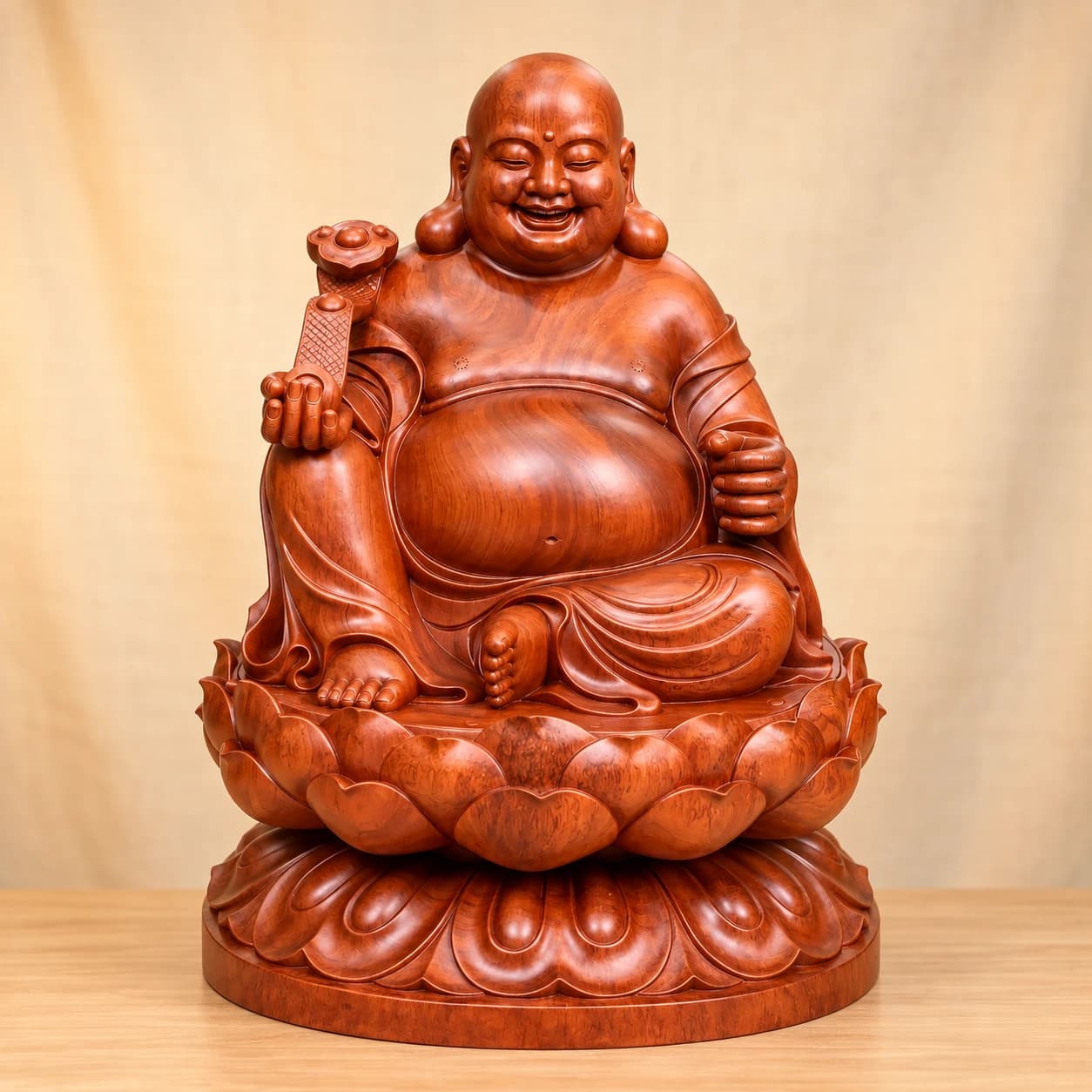
The familiar image of a round-bellied, laughing Maitreya comes from the monk Budai, who lived in China during the Five Dynasties period. He carried a large cloth sack, wandered cheerfully helping people, and came to be seen as an incarnation of Maitreya. In Vietnam, Maitreya’s festival is celebrated on the first day of the Lunar New Year.
Meaning of the statue
Maitreya’s broad smile symbolises joy, optimism and generosity, a reminder to let go of worries and be open-hearted with others. The large belly suggests a heart big enough to embrace all of life’s ups and downs.
In folk culture the statue is also linked to good fortune and prosperity, so it is a popular gift for house-warmings, shop openings and the New Year.
Details of the figure
Maitreya is usually carved seated at ease, with a round belly and a wide smile. Some pieces add a cloth sack, gold ingots or prayer beads, each a wish for happiness and plenty.
Placement suggestions
In folk feng shui, Maitreya can be placed in the living room, at a reception desk or in the workplace, facing the main door to welcome guests and good fortune. Set it on a shelf or table at eye level or higher rather than directly on the floor.